BMW’s cost cuts threaten MINI’s future despite strong sales
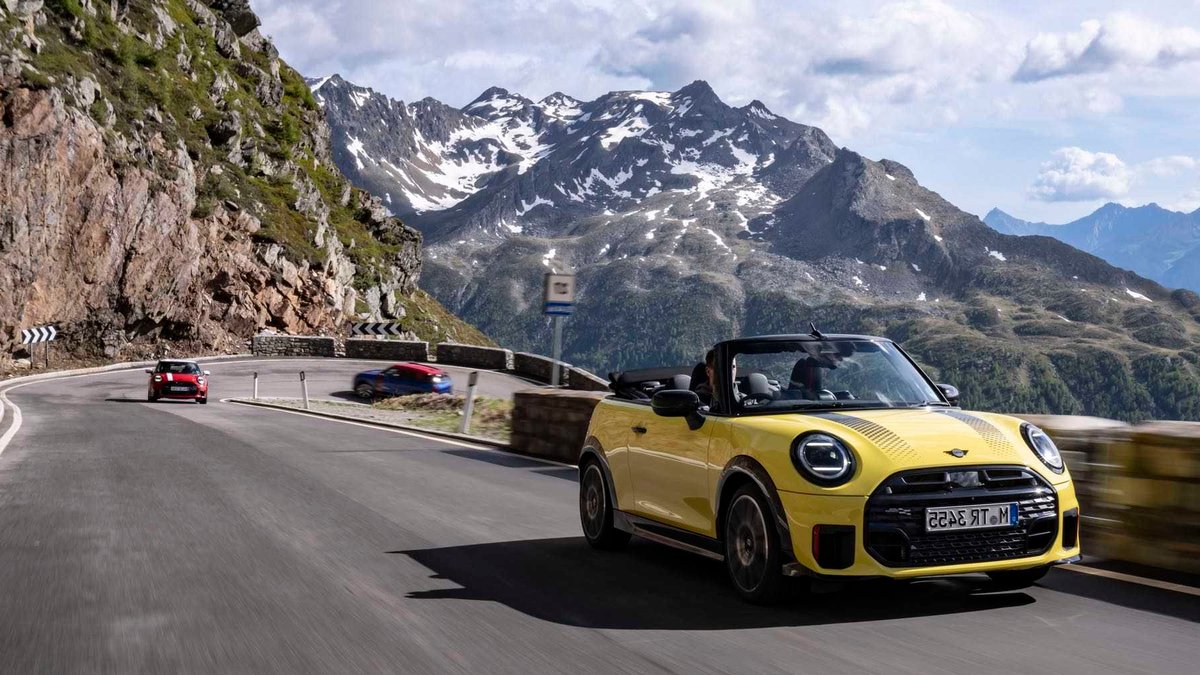
BMW’s push to reduce expenses across its operations has sparked concerns about the long-term prospects of its MINI division, even as the brand maintains robust sales figures. During the automaker’s most recent earnings discussion, one analyst questioned whether MINI—long celebrated for its bold styling and premium positioning—could survive if it fails to deliver profitability. Stefan Richmann, BMW’s finance chief and former leader of MINI, responded with noticeable personal frustration. His comment, delivered with an uncertain tone, highlighted the growing divide between the brand’s market success and BMW’s financial objectives.
The brand sold 149,535 vehicles in the first half of 2024, marking a 12% increase driven primarily by demand for the Countryman crossover and the Cooper hatchback. However, this growth comes with financial strain: nearly 37% of its sales now consist of electric models, a segment where rising battery costs and EU tariffs on Chinese-built vehicles squeeze profit margins. BMW’s overall group profit margin dropped to 3.6% in the same period, partly due to weaker performance in China, leaving MINI, with its high production costs at plants in Oxford and Leipzig, vulnerable to cost-reduction measures.
The Cooper and Aceman electric models, manufactured in China, face EU trade barriers that offset their cost advantages. Meanwhile, traditional combustion-engine models remain expensive to produce. The core issue isn’t a lack of demand, Audi has already exited the compact hatchback segment, but the difficulty of aligning profitability with MINI’s brand identity. BMW’s aggressive shift toward electrification adds further pressure: while MINI leads in EV adoption among its peers, shared platforms with larger BMW models limit its financial independence.
Shared Platforms Risk Diluting MINI’s Identity
The next-generation Countryman, set for release in 2032, will adopt BMW’s Neue Klasse architecture, a move that ensures cost efficiency but threatens to weaken MINI’s signature proportions. The iX3, built on the same platform, demonstrates how shared underpinnings can standardize design across BMW’s lineup. MINI has insisted its smaller adaptations preserve its character, but the delay from an earlier 2028 target to 2032 suggests the brand now takes a backseat to BMW’s broader electrification goals.
Related Post: New Mini Cooper S Review and Buying Guide
Earlier plans for a dedicated MINI platform, discussed as far back as 2018, were abandoned in favor of shared architectures like the UKL, which now ties MINI and BMW’s compact models together. Even MINI’s push for a rear-wheel-drive electric model, a potential competitive edge, relies on BMW’s Gen6 hardware. When cost-sharing and differentiation depend on the same components, the result forces MINI to choose between saving money and preserving its unique identity.
MINI as a Model for BMW’s Broader Strategy
MINI now serves as a test bed for BMW’s cost-reduction strategies, particularly the shift to direct sales in China. The company has no intention of abandoning the brand, but its capacity to maintain its quirks hinges on BMW’s investment decisions. The upcoming Cooper and Countryman models, currently in development, will determine whether MINI can adapt to tighter budgets while keeping its core appeal.
MINI’s Electrification Strategy Tied to Shared BMW Hardware
MINI’s electric future depends on components designed for larger BMW models. The brand’s push for a rear-wheel-drive electric vehicle relies on BMW’s Gen6 architecture, the same platform used across its lineup. This shared foundation ensures cost efficiency but limits MINI’s ability to develop distinct engineering features.
The decision to abandon a dedicated MINI platform in 2018 further reinforced this trend. Since then, every new generation has balanced cost-sharing with brand differentiation, often prioritizing shared architectures like the UKL. These choices reflect BMW’s broader strategy of consolidating development costs rather than investing in MINI-specific solutions.

Volkswagen cuts jobs MINI expands its reach


