MIROS Trials Minimum Highway Speed, Slow Driving Risks
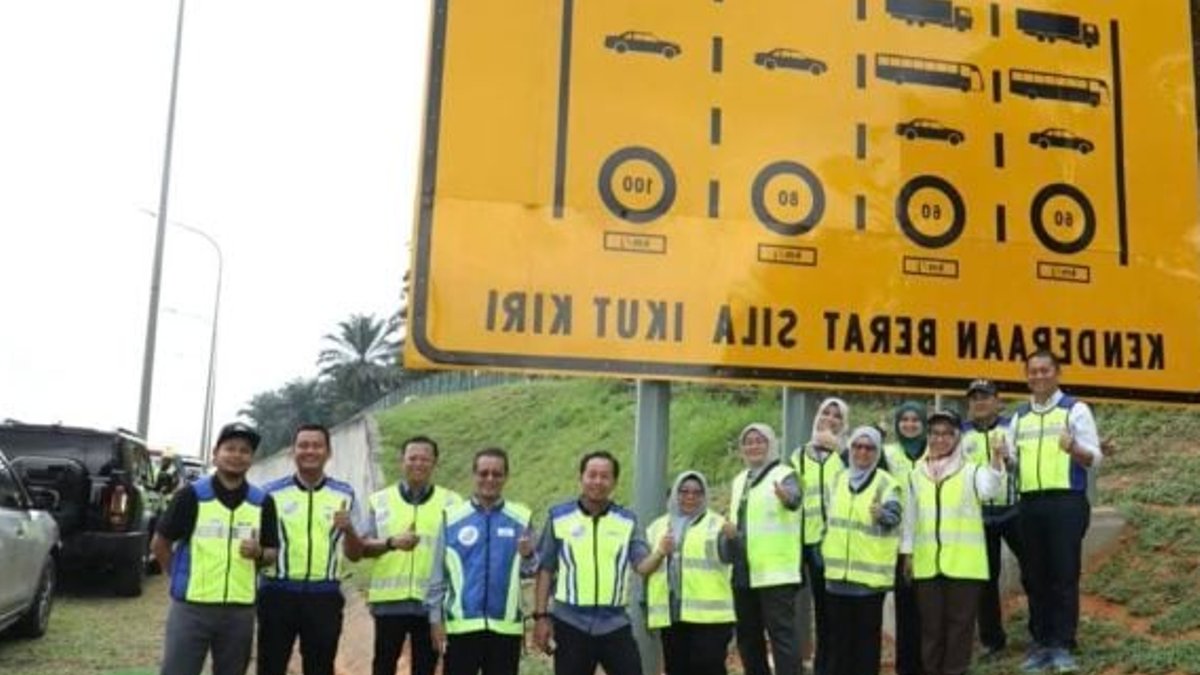
Malaysia has begun a trial that puts a floor on highway speeds, aiming to curb lane hogging and smooth traffic flow. The proof‑of‑concept, launched on August 1, uses advisory signs that tell drivers the minimum speed expected for each lane on selected expressways.
Drivers must adapt quickly.
How the advisory system works
Under the banner Had Laju Nasihat Minimum, the Malaysian Institute of Road Safety Research (MIROS) together with the Malaysian Highway Authority (LLM), PLUS and the SKVE, installed signboards on three pilot stretches. Each lane displays a recommended minimum speed, and motorists are asked to travel at least that pace unless weather or congestion makes it unsafe.
Drivers who wish to move more slowly are expected to stay in the leftmost lane; the lanes to the right carry higher advisory minima. The signage is not enforceable like a speed limit; it merely offers guidance, and the trial’s five objectives include preventing lane monopolising, narrowing speed gaps, boosting capacity, and lowering the chance of hazardous lane changes.
Related: GWM awaits Malaysia’s EV policy clarity
Locations and expectations
The trial covers the northbound segment of PLUS E1 from Tanjung Malim to Behrang, the SKVE E26 corridor between Ayer Hitam toll plaza and Bandar Saujana Putra, and the northbound stretch of PLUS E2 from Bandar Ainsdale to Nilai. Along these routes, motorists are reminded to match their lane to the posted advisory minimum, give way to overtaking vehicles, and keep a safe following distance.
“Jangan jadi punca trafik terganggu,” the agency’s announcement read, urging drivers not to become the source of traffic disruption.
Research shows that the biggest safety risk on high‑speed roads comes from speed variance rather than absolute speed. A vehicle traveling well below the average flow creates a moving obstacle that forces following drivers to brake, change lanes, and accelerate, each step presenting an opportunity for error. Historical studies, such as the 1964 “Solomon curve,” demonstrated a U‑shaped relationship between crash rates and deviation from mean traffic speed, with higher risk for both faster and slower drivers. Subsequent analyses confirmed that large speed differences, even on modern highways, increase the likelihood of collisions.
From a broader perspective, the trial reflects a move toward managing traffic as a system rather than relying solely on static limits. By encouraging drivers to self‑sort according to lane‑specific speeds, the approach seeks to reduce the ripple effects of braking waves that can stretch for kilometres, a phenomenon observed in experiments where a single slow car triggered stop‑and‑go traffic jams. If successful, the advisory system could be expanded to more routes, offering a low‑cost tool to improve flow without adding new enforcement mechanisms.
Related: NYC Replaces Street Parking With New Trash Bins
Critics may argue that enforcing a minimum speed could be difficult, especially in heavy rain or during peak congestion. However, the trial explicitly exempts such conditions, and the advisory nature of the signs means compliance relies on driver awareness rather than legal compulsion. The real test will be whether motorists adjust their lane choices voluntarily and whether the measured outcomes—fewer abrupt lane changes and smoother traffic density—justify broader rollout.
Early observations suggest that drivers who keep to the left when traveling slowly reduce the need for sudden overtaking manoeuvres. Conversely, vehicles that linger in the fast lane at low speeds force others to weave around them, creating blind‑spot hazards and increasing the chance of rear‑end crashes. One widely shared local incident illustrated this risk when a slow‑moving car in the overtaking lane was struck from behind, prompting calls for clearer lane discipline.
Should the data from the three test sections show a decline in speed differentials and related incidents, policymakers may consider integrating advisory minimums into the national highway signage program. Until then, the guidance remains a voluntary prompt: match your speed to the lane you occupy, let faster traffic pass, and avoid becoming the catalyst for unnecessary lane changes.

GWM awaits Malaysia’s EV policy clarity


