BMW extends combustion engine life with software upgrades
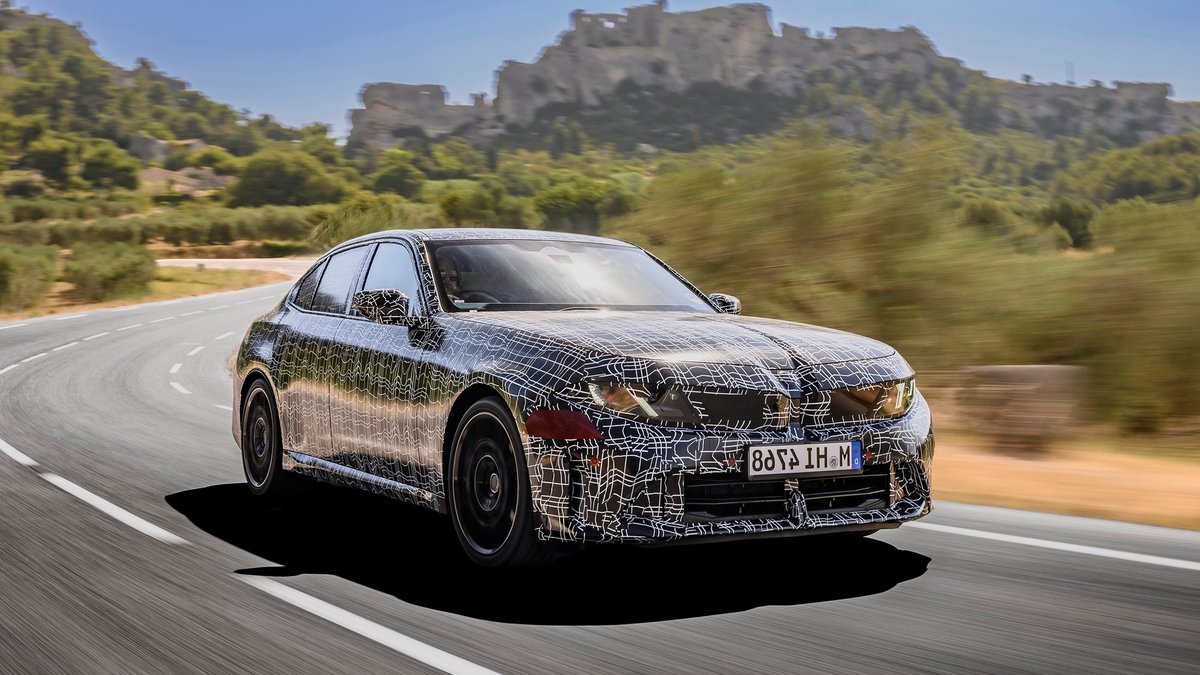
BMW’s upcoming 3 Series demonstrates how the automaker intends to prolong the lifespan of its existing combustion engine frameworks—a strategy that may directly influence the future of the MINI Cooper. The G50, the new foundation for the 3 Series, maintains the established CLAR body structure but integrates a software system originally developed for electric vehicles, effectively creating a hybrid architecture without requiring a complete platform redesign.
The G50 preserves the CLAR body but incorporates a modified version of BMW’s Heart of Joy software, which was initially designed for the electric Neue Klasse architecture. This system manages steering, braking, and traction control with millisecond precision, now running on hardware identical to the EV version but with a processor tailored for combustion engines. A new sensor network, the 6D Motion Observer, continuously monitors grip conditions, including lateral, vertical, and longitudinal acceleration, and transmits this data to the software to compensate for the slower response times inherent to internal combustion engines.
This approach represents more than a minor adjustment. BMW is positioning the G50 as a test case, illustrating how an aging platform can be paired with advanced software to extend its relevance. The decision reflects broader industry challenges, where automakers must balance rising development costs with tightened production schedules. While electric motors deliver instant responsiveness, combustion engines cannot match that speed. The solution involves software that synchronizes multiple systems in real time, effectively mitigating the hardware’s limitations.
MINI’s Cooper faces UKL platform’s looming deadline
For MINI, this method could serve as a template for the next generation of petrol-powered Cooper models. The UKL platform, which supports the F66 Cooper, has been in production since 2005, nearly two decades, and the F66 Cooper reaches the end of its planned production run in mid 2032. A full replacement would demand significant investment and time, particularly for a lower-volume vehicle like the Cooper. Instead, MINI might adopt a similar strategy: retain the UKL structure while integrating software adapted from BMW’s electric architecture, mirroring the approach taken with the G50.
The Neue Klasse architecture, reserved exclusively for electric models such as the next Countryman, will not be an option for the petrol Cooper. However, the G50 proves that a reworked chassis combined with borrowed software can deliver results. BMW has already applied this method with Heart of Joy, first deploying it across electric vehicles before adapting it for combustion models. MINI has a history of leveraging proven BMW technology—UKL itself originated as a BMW decision before being repurposed for the Cooper, and this could represent the next logical evolution.
This development extends beyond the Cooper. The same principles apply to the Countryman, whose current platform is also approaching the end of its production cycle. The electric Countryman will transition to the Neue Klasse, but the petrol variant will require a new foundation. A hybrid approach, similar to the G50’s design, would be more practical than constructing a dedicated combustion platform for a niche model.
Software bridges gap between EV agility and combustion lag
During discussions, BMW emphasized addressing a fundamental challenge: how to make a combustion-powered vehicle feel as agile as an electric one without a complete overhaul. The broader question remains whether this solution can be scaled effectively. For MINI, where financial constraints and tight deadlines are constant factors, the answer may lie in adopting and adapting proven technologies from its larger sibling.
BMW’s decision to reuse and repurpose its electric software for combustion models shows a shift toward efficiency in platform development. The Heart of Joy system, originally designed for EVs, now demonstrates flexibility by being applied to internal combustion engines, reducing the need for entirely new architectures. This strategy could allow MINI to avoid costly redesigns while maintaining performance standards, particularly for models that rely on shared technology.

Paul Feig to Direct Italian Job Sequel in Development


