
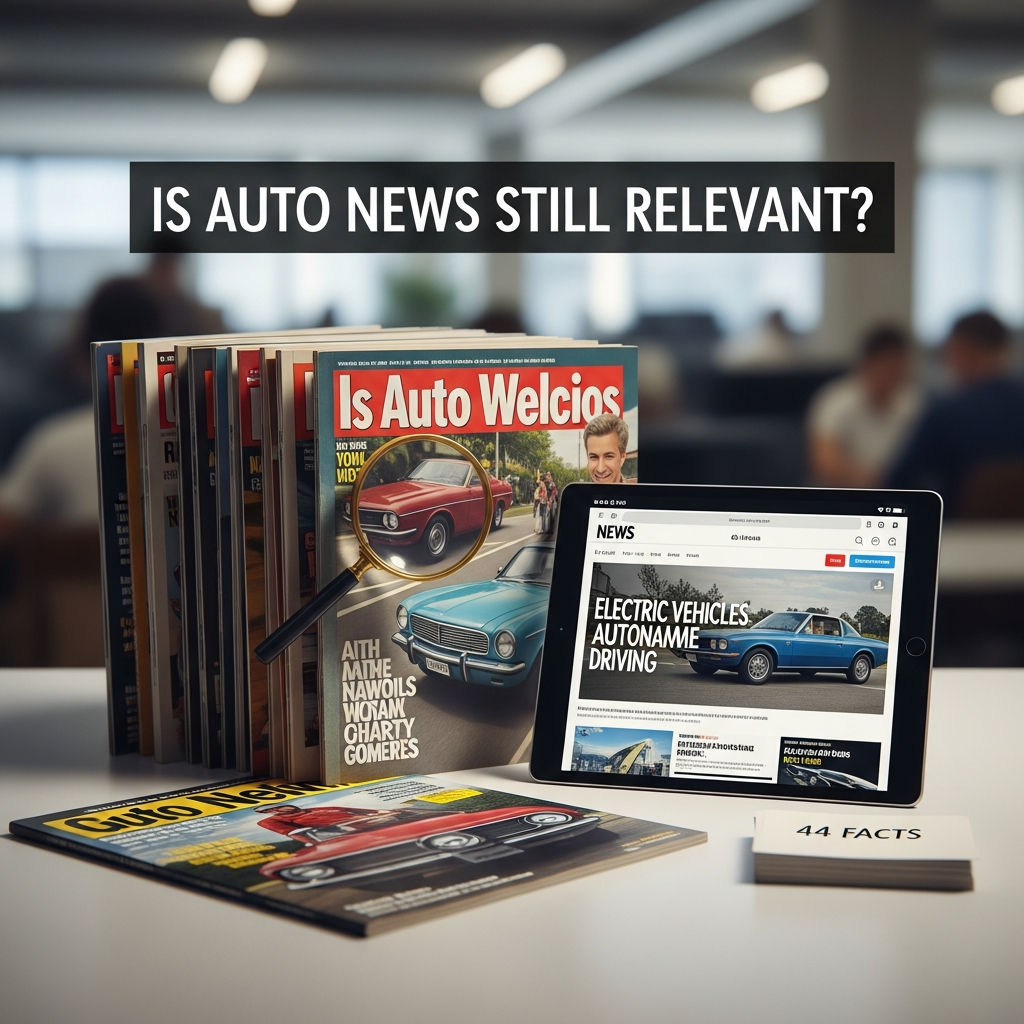
Is Auto News Still Relevant? The Shift from Print to Digital Dominance
In an era where TikTok trends move faster than a supercar and social media influencers can make or break a brand with a single post, many ask: Is auto news still relevant? The short answer is yes, but the landscape has changed dramatically. Automotive journalism is no longer confined to glossy magazines delivered once a month. It has evolved into a 24/7 digital ecosystem that dictates market trends, influences multibillion-dollar investments, and guides every step of the consumer journey.
Today’s car buyers are more informed than ever, and that information comes from the constant stream of automotive news. From the latest EV battery breakthroughs to supply chain updates, the relevance of auto news hasn’t diminished; it has simply decentralized. To understand the current state of the industry, we have compiled 44 facts that prove auto news is not only surviving but thriving in the digital age.
44 Facts About the Relevance and Evolution of Auto News
The Consumption of Automotive Content
- 1. Digital-First Research: Over 92% of car buyers now research their vehicles online before ever stepping foot in a dealership.
- 2. YouTube Dominance: YouTube has become the primary “news” source for visual reviews, with millions of hours of car content consumed daily.
- 3. The Death of Print: While traditional print circulation for car magazines has dropped by over 50% in the last decade, their digital traffic has seen a 300% increase.
- 4. Influencer Impact: Independent reviewers on social media now have larger reach than many 50-year-old automotive publications.
- 5. “Car TikTok” Growth: Short-form video news (under 60 seconds) regarding car hacks and new releases receives billions of views annually.
- 6. Podcast Expansion: Automotive podcasts are one of the fastest-growing audio niches, catering to enthusiasts during their daily commutes.
- 7. Newsletter Resurgence: Curated email newsletters like “The Morning Drive” have become essential for industry professionals to stay updated.
- 8. Live Stream Launches: Digital news has forced manufacturers to livestream car reveals, reaching millions globally in real-time instead of waiting for a press release.
- 9. Decentralized News: Platforms like Reddit (r/cars) act as decentralized news hubs where owners break news faster than traditional outlets.
- 10. High Retention: Long-form automotive journalism (articles over 2,000 words) still sees high engagement from serious buyers looking for technical data.
Impact on Consumer Behavior and Sales
- 11. Brand Perception: 1 in 3 buyers state that negative news regarding a brand’s reliability directly influences their decision to switch brands.
- 12. Recall Speed: News regarding safety recalls travels 10x faster today than it did in the 1990s, forcing manufacturers to be more transparent.
- 13. Comparative Shopping: Comparison news articles are the most searched-for type of automotive content.
- 14. The “Hype” Cycle: Leaked “spy shots” published by news sites can create a two-year hype cycle before a car is even released.
- 15. Financial Influence: News regarding interest rate changes and OEM incentives drives immediate spikes in weekend showroom traffic.
- 16. Trust in Third Parties: Consumers trust independent news outlets 70% more than the marketing materials found on a manufacturer’s website.
- 17. Gen Z Reach: 60% of Gen Z car buyers follow at least one automotive news account on Instagram or X (formerly Twitter).
- 18. Pricing Transparency: Sites like Kelley Blue Book and Edmunds have turned “pricing news” into a tool for consumer empowerment.
- 19. Timing is Everything: News about upcoming model year changes often causes consumers to delay purchases to wait for the newest tech.
- 20. The “Tesla Effect”: Elon Musk’s use of social media as a news platform changed how the entire industry communicates with its audience.
The Rise of EV and Tech News
- 21. EV Interest: Electric vehicle news is the fastest-growing sub-sector of automotive journalism, growing 40% year-over-year in search volume.
- 22. Charging Anxiety: News regarding charging infrastructure is a top-five concern for modern car news readers.
- 23. Tech Site Integration: Mainstream tech sites (The Verge, Engadget) now cover car news as frequently as they cover smartphones.
- 24. Software Over Hardware: Modern auto news focuses more on “Software Defined Vehicles” (SDVs) than traditional engine mechanics.
- 25. OTA Updates: News about Over-the-Air updates allows cars to stay “newsworthy” years after their initial release.
- 26. Battery Breakthroughs: Solid-state battery news is currently the most viral topic in the automotive engineering space.
- 27. Autonomous Driving: Progress reports on Level 3 and Level 4 autonomy attract non-car enthusiasts into the automotive news sphere.
- 28. CES vs. Auto Shows: The Consumer Electronics Show (CES) has become more relevant for auto news than many traditional international auto shows.
- 29. Sustainability Reports: News regarding a manufacturer’s carbon footprint is now a key factor for ESG-conscious investors and buyers.
- 30. AI Integration: News about AI assistants in cars (like ChatGPT integration) is a trending topic for 2024 and beyond.
Industry Trends and Market Shifts
- 31. Supply Chain Literacy: The 2021 chip shortage made “supply chain news” a mainstream interest for the average car buyer.
- 32. Used Car Indices: News regarding the used car market (Manheim Index) is now followed by consumers as closely as the stock market.
- 33. Globalization: Auto news now provides heavy coverage of Chinese manufacturers (like BYD), reflecting their growing global dominance.
- 34. Direct-to-Consumer: News about dealership laws and direct-sales models (like Rivian and Lucid) is reshaping the retail landscape.
- 35. Regulatory News: Changes in EPA regulations or Euro 7 standards are critical news topics that dictate what engines will be available next year.
- 36. The Niche Boom: “Overlanding” and “Off-roading” news has exploded, creating a sub-industry of specialized news sites.
- 37. Heritage and Nostalgia: News about “continuation cars” and retro-styled EVs (like the ID. Buzz) bridges the gap between old and new fans.
- 38. Subscription Models: News about “pay-to-use” features (like heated seats) often goes viral due to consumer backlash.
- 39. Merger News: The formation of conglomerates like Stellantis shows how news of corporate mergers impacts brand identity.
- 40. Motorsport Synergy: Formula 1’s popularity in the U.S. (driven by “Drive to Survive”) has caused a surge in news traffic for performance car brands.
The Future of the Medium
- 41. AI-Generated News: Some outlets are beginning to use AI to report on basic data like price changes and recall numbers.
- 42. Augmented Reality: Future auto news may include AR “test drives” accessible through a smartphone or headset.
- 43. Crowdsourced Journalism: Dashcam footage and user-submitted “spy shots” are becoming a primary source for breaking news.
- 44. From “Buying” to “Using”: The focus of auto news is shifting from how to buy a car to how to maximize the technology inside it.
Why Auto News is More Critical Than Ever
The relevance of auto news today stems from the complexity of the modern vehicle. In the 1980s, a car buyer needed to know about horsepower and fuel economy. Today, a buyer needs to understand battery chemistry, software ecosystems, semi-autonomous safety suites, and residual value in a volatile market. Auto news serves as the translator between complex engineering and the end consumer.
The Financial Stakes
As the average price of a new car pushes past $48,000, the financial risk of making a “bad” purchase has never been higher. Automotive news provides the data-driven insights—such as depreciation schedules and long-term reliability scores—that protect a consumer’s investment. Without a vibrant news ecosystem, consumers would be at the mercy of manufacturer marketing, which rarely highlights a vehicle’s flaws.

Safety and Advocacy
Automotive journalism also acts as a watchdog. When a publication like Consumer Reports or a major news outlet identifies a recurring safety flaw, it creates the public pressure necessary for government investigations and recalls. In this sense, auto news isn’t just about “entertainment”—it is a matter of public safety.
Conclusion: The Verdict on Relevance
Is auto news still relevant? Absolutely. However, its relevance is no longer tied to the medium of paper and ink. It is tied to the information needs of a society that views the car as a high-tech mobile device. Whether it’s a 15-second clip on social media or a deep-dive technical analysis of a solid-state battery, auto news remains the heartbeat of the industry. As long as people need to move from point A to point B, they will look to automotive news to help them do it safer, faster, and more efficiently.