Hydrogen car breaks speed record with wider impact
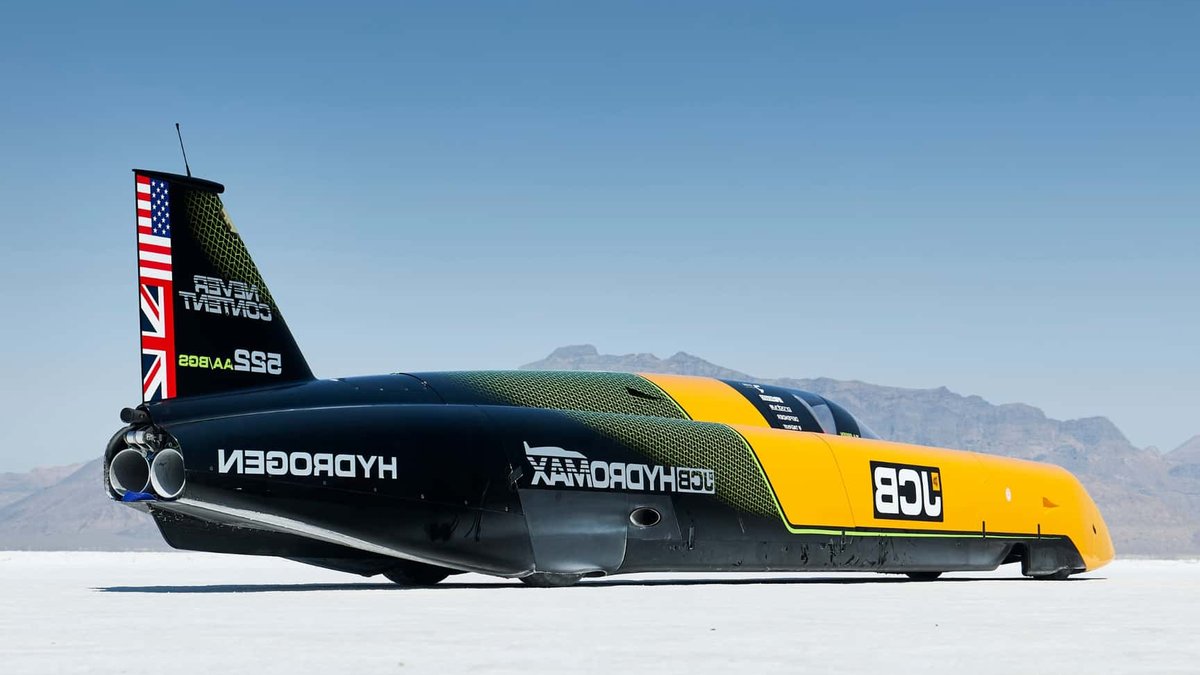
A hydrogen-powered car reached 406.320 mph at Utah’s Bonneville Salt Flats last week, setting a new FIA world record. The milestone, achieved by construction equipment manufacturer JCB, highlights hydrogen’s potential beyond limited uses, even as critics argue the fuel remains impractical for most passenger vehicles.
The Record Run
The car, named Hydromax, first hit 400.623 mph on August 11. FIA rules required a second run within an hour to officialize the record. Crew members refueled the hydrogen tank, replaced tires, and added 550 pounds of ice to the cooling system before the next attempt. The average of both runs secured the record.
Retired RAF Wing Commander Andy Green, the only person to break the sound barrier on land, drove the streamliner. Green previously held the diesel land-speed record in 2006, also in a JCB vehicle. His participation reflected the project’s strong engineering background—Prodrive, Ricardo, and Xtrac, firms linked to Formula 1, IndyCar, and hypercars like the Bugatti Veyron, contributed to the build.
Ricardo, which provided transmissions for the Veyron and Chiron, modified Hydromax’s twin hydrogen four-cylinder engines to generate 1,600 horsepower combined. The production versions of these engines produce 74 horsepower each, but the team reduced their weight by over 200 pounds. Xtrac, known for motorsport work, helped develop the car’s transmissions.
Speed and Skepticism
The attempt faced challenges. On the final runs, conditions were nearly ideal—cool temperatures, minimal wind, and a salt surface so smooth it felt like glass. The car’s first pass left a long trail of salt vapor.
Related: Farizon starts CKD in Indonesia, Geely’s first plant outside China
The project started 15 months earlier at the request of JCB Chairman Lord Anthony Bamford. His company’s motto, “jamais content,” guided the effort.
Beyond the Salt Flats
For car enthusiasts, the record doesn’t mean hydrogen-powered sports cars are imminent. Hydrogen combustion engines, while powerful, are less efficient than fuel cells and emit nitrous oxide. Infrastructure remains limited—only two hydrogen fuel-cell vehicles, the Honda CR-V e:FCEV and Toyota Mirai, are currently sold in the U.S.
The achievement does suggest hydrogen’s promise for heavy industry. JCB has already produced over 200 hydrogen combustion engines, and companies like Volvo Trucks are testing the technology for commercial use. Toyota applied insights from its hydrogen-powered GR Corolla H2 Concept to enhance torque in the production GRMN Corolla.
Prodrive, Ricardo, and Xtrac’s work on Hydromax may influence future performance projects. These firms operate near the enthusiast market, and their experience could lead to indirect benefits. The record shows how high-speed engineering can drive progress in unexpected areas.
The Hydromax’s success won’t resolve hydrogen’s challenges immediately. But for a brief moment on the salt flats, it proved the fuel could power something remarkable—and that may be enough to keep interest alive.

VW chief warns staff of dire crisis


